
|
COCKPIT
Last Updated: 24-June-2010
Future Additions:
Engine Room Port
Winch Rearrangement
MR 10
Lexan Companionway Hatch Boards
Air Conditioner
Teak Cockpit Combing
Binnacle Handhold
GPS/Fishfinder/VHF Mounting Box
Hard Dodger and Extension
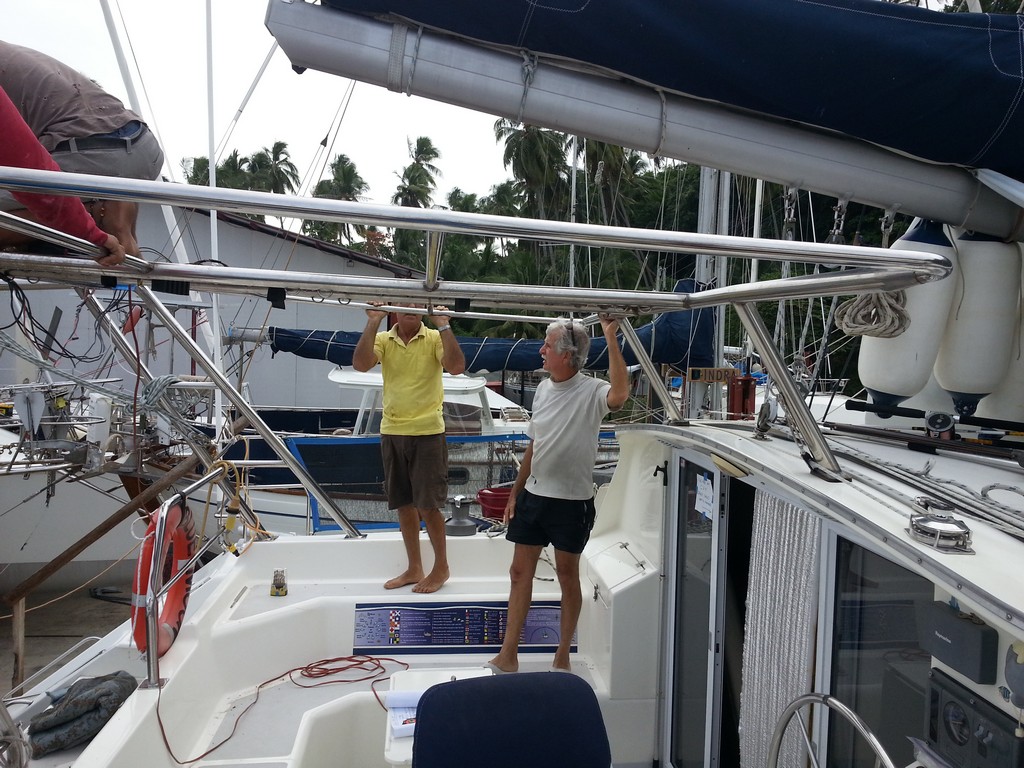
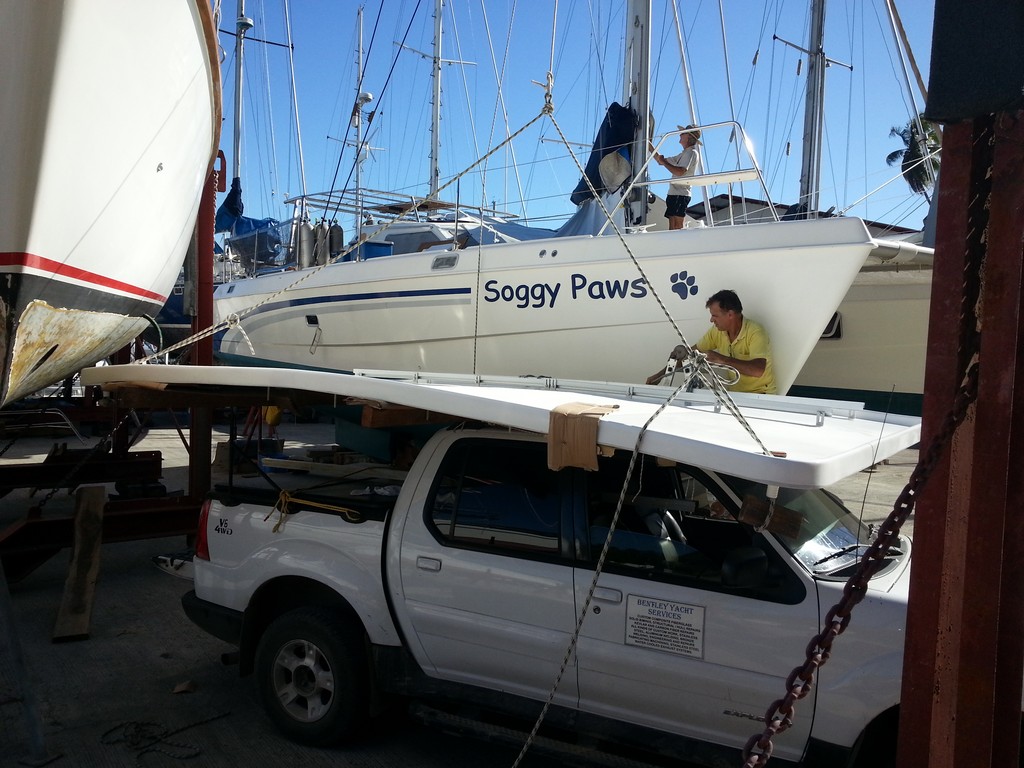
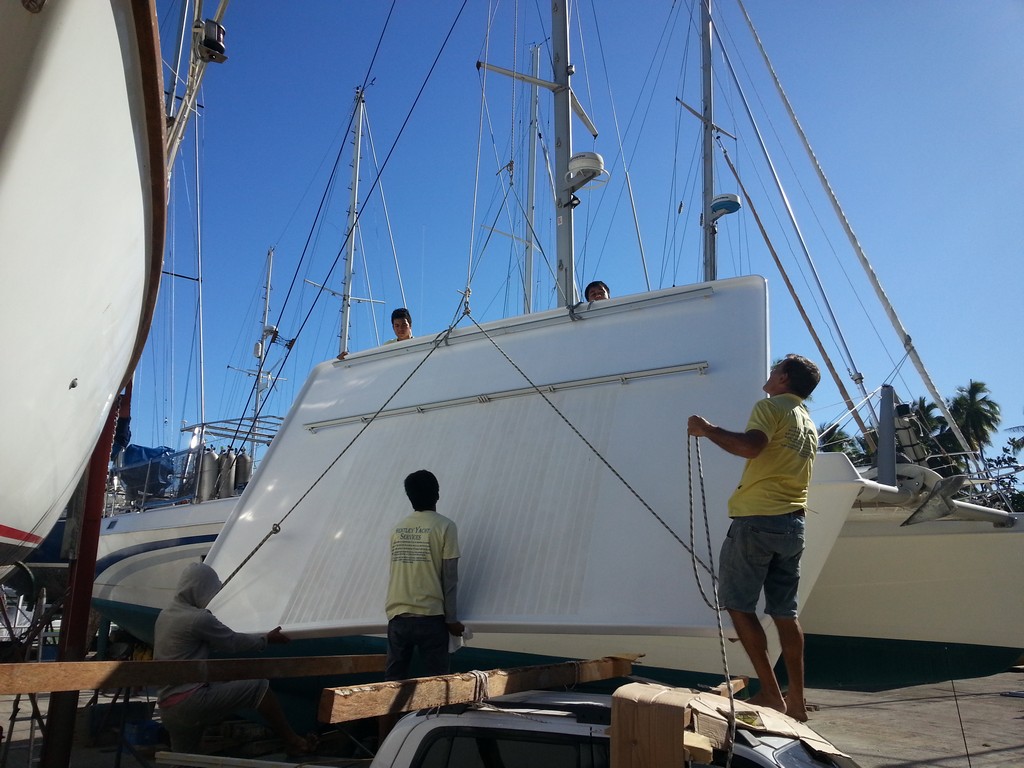
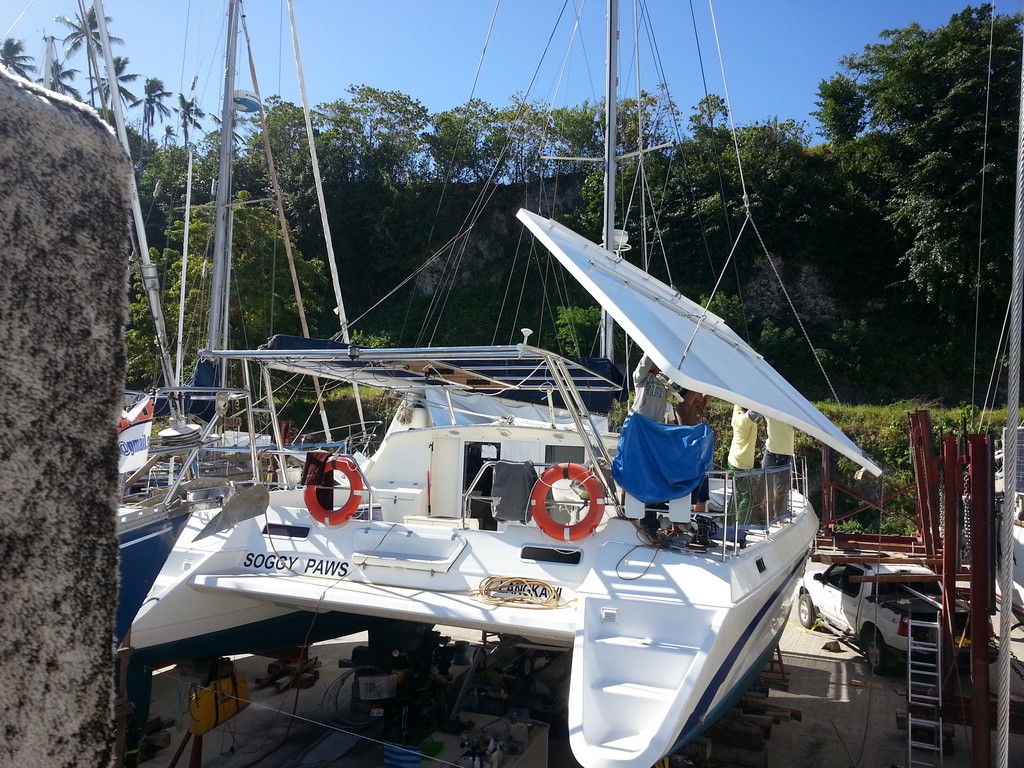
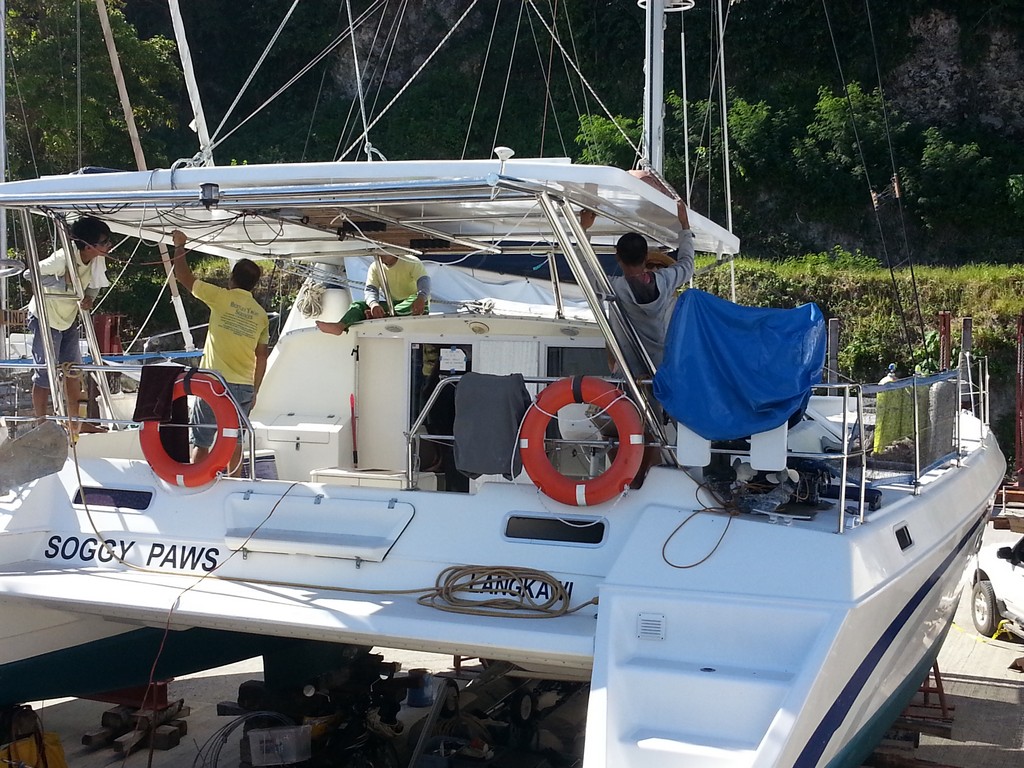
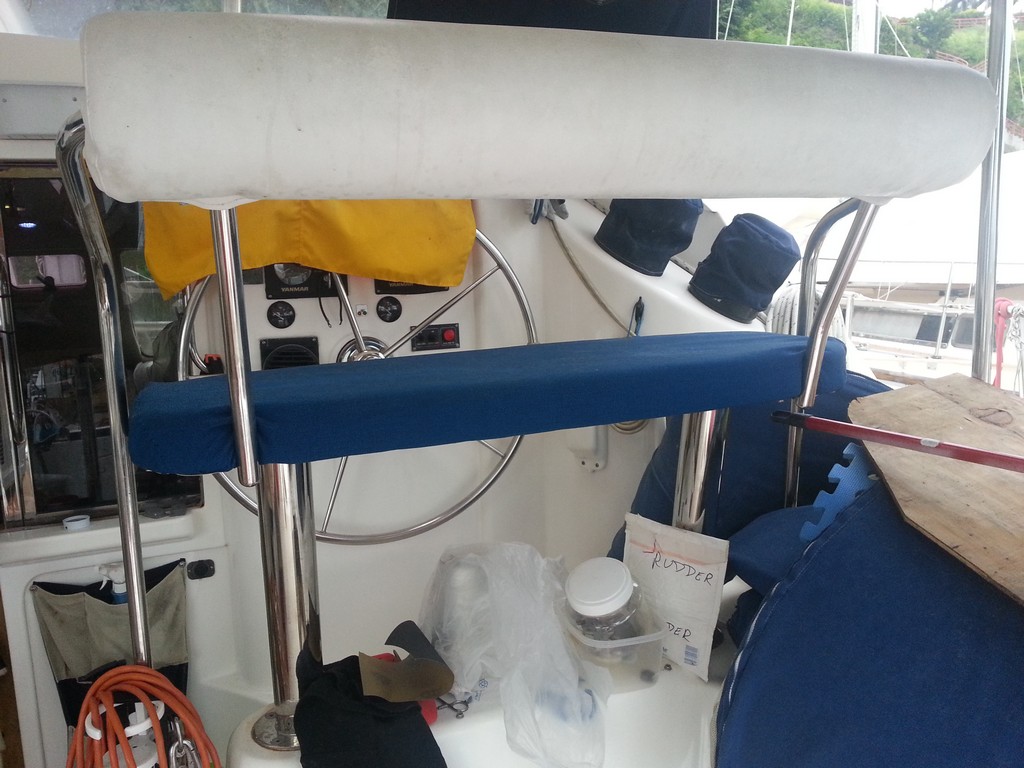
This new hard dodger
replaces a 9 year old soft Sunbrella dodger originally mounted on 1"
stainless bows. The new dodger frame is constructed of 1-1/4" heavy welded aluminum tube
and is thru bolted to the cockpit combing. It has a bolt on
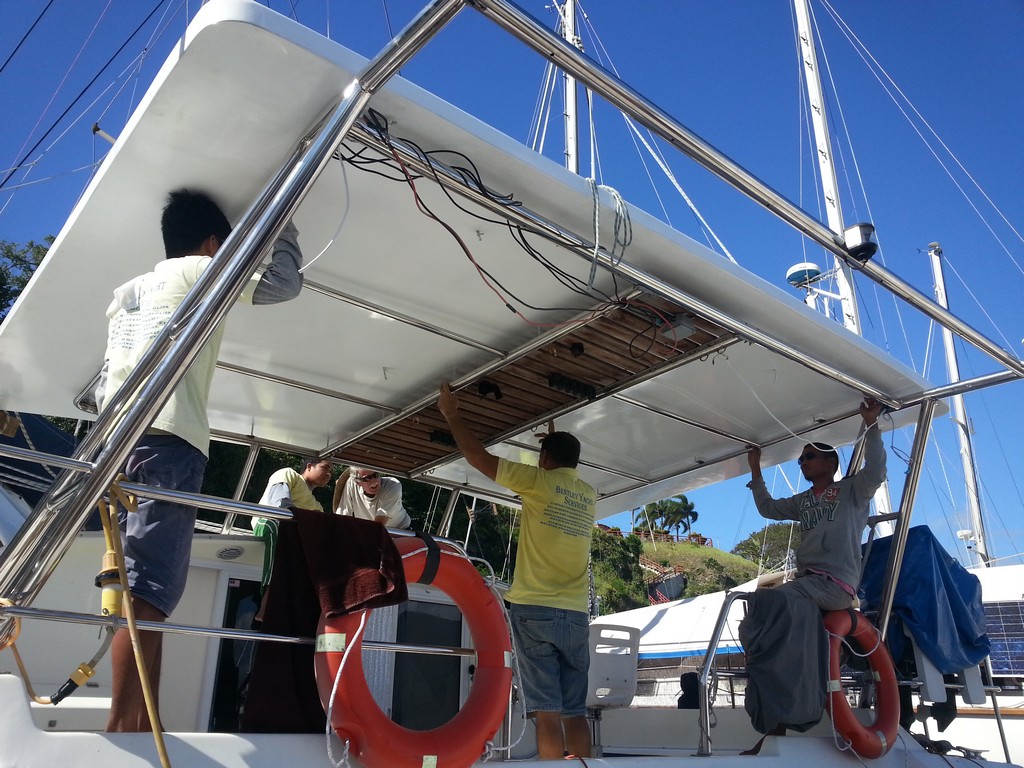
1/2" thick expanded rigid PVC white top with gray Sunbrella and clear Crystal 20-20 sides.
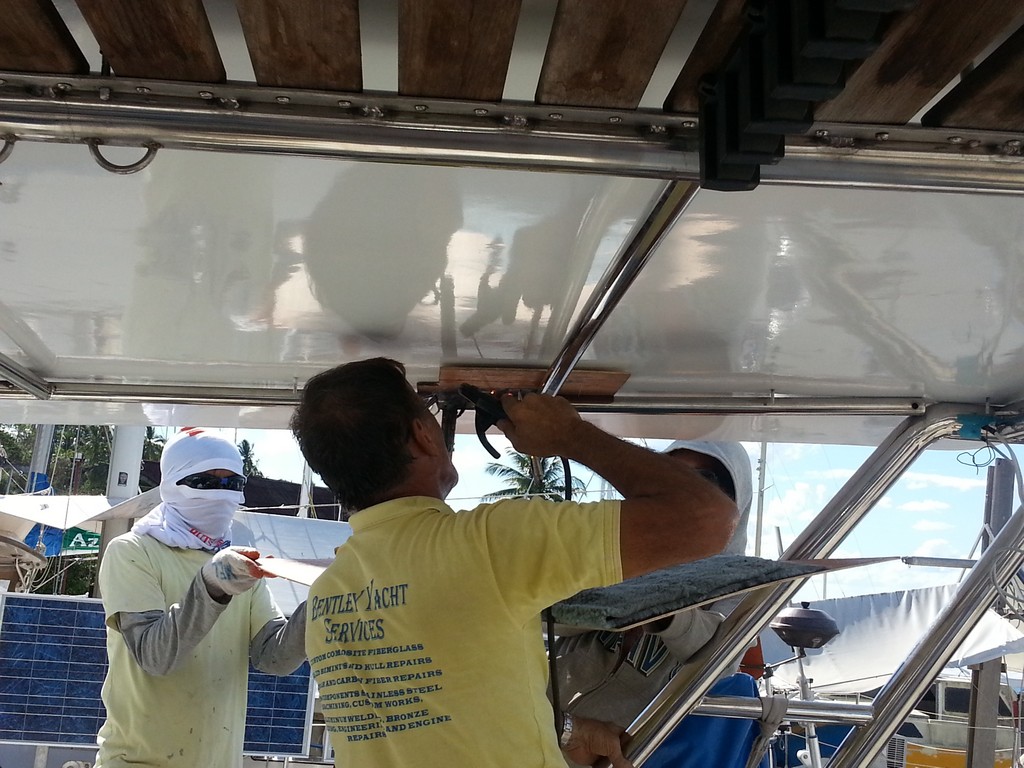
The bolts, with nylon washers and no caulk, that fasten the PVC top to the
frame go through holes in 20 small tabs welded
to the top of the frame. There are 5 handholds placed at strategic
locations around the perimeter.
|
The
new dodger is super strong but the PVC top can still be removed quickly to reduce windage in
case of a major hurricane.
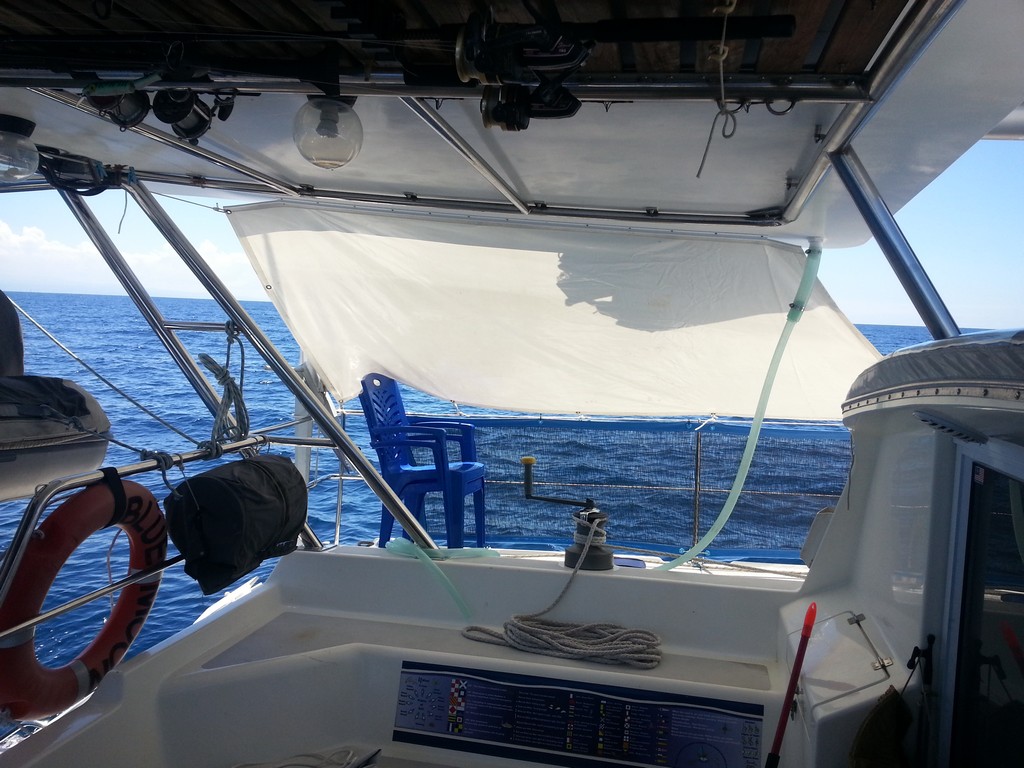
The hard dodger covers the front third of the cockpit
while the rear is covered by a Sunbrella dodger extension. The
extension and sides are attached to the PVC top with white PVC slotted
track. The track is fastened to the PVC top with small hidden screws.
A more permanent attachment could be made by first gluing the track to the
top with PVC cement.
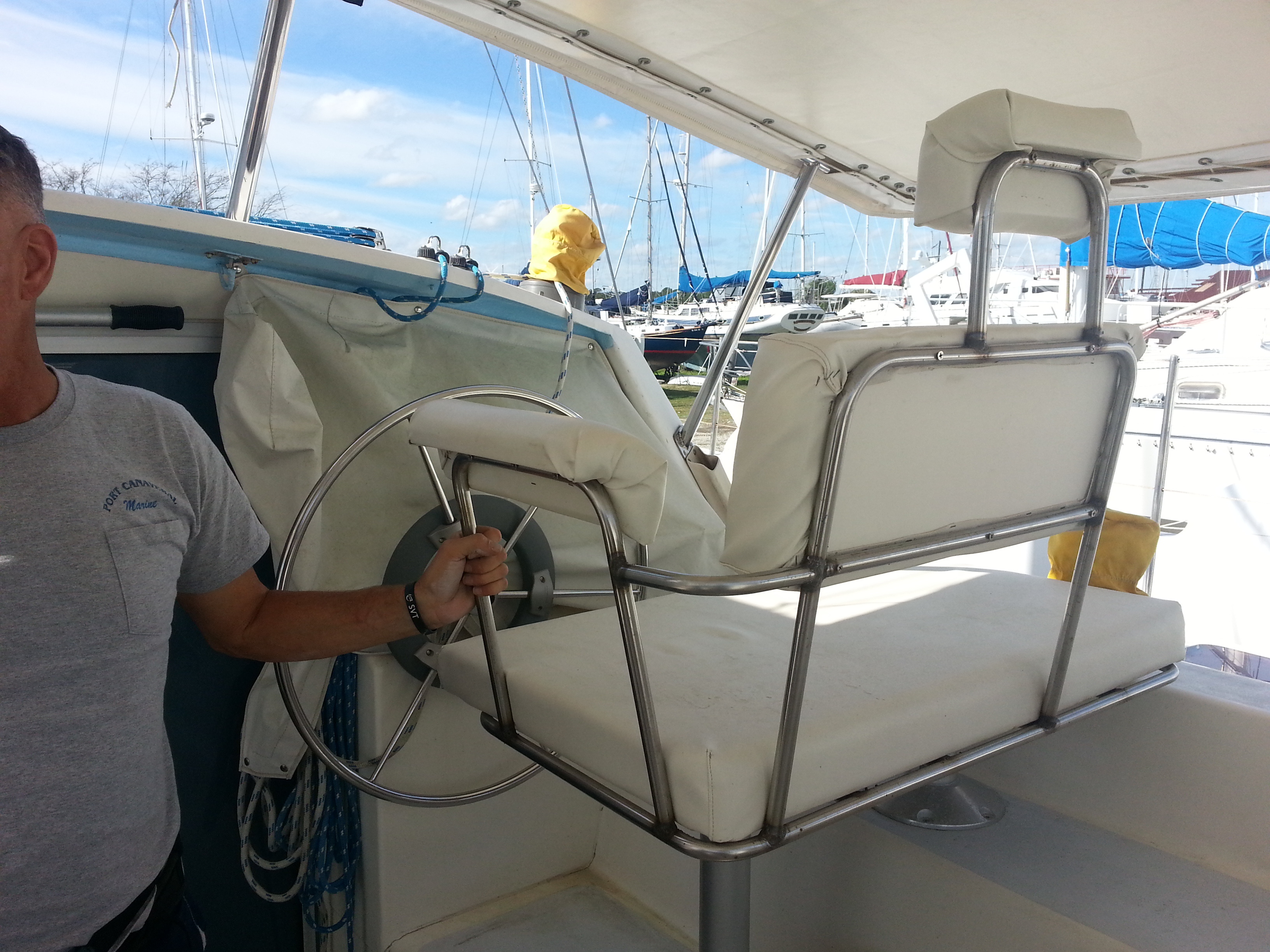
The
two back bows are 1" stainless tube held in position
with handholds on both sides, two 1" tubes off the back bow to the boom
gallows and an angled cross bar across the back for athwart ships rigidity.
These two bows support the Sunbrella dodger extension that attaches to the boom gallows at
the aft end of the cockpit. Roll up sides and front are attached to
the dodger top using the PVC track. Rollup sides further aft are
attached to the Sunbrella extension with zippers and snaps. They are
all used to enclose the
cockpit in case of rain or heavy spray.
Suppliers:
Indian River Fabrication
(frame), E & T
Plastics (expanded PVC sheet), Canvas Connection (dodger) (321) 308-2905
Original
specs provided to Frame Fabricator
-
Legs must allow propane locker full
opening
-
Top Pads - .25” anodized aluminum plate
-
14 ea at positions shown
-
.25+” holes for .25” bolts
-
Welded flush with top of tubes
-
Leg Pads - .25” anodized aluminum plate
-
6 ea at bottom of legs
-
Sized to conform to landing spot
-
Minimum two 5/16” holes in each pad
-
Frame of 1.25” ID heavy-wall anodized
aluminum tubing
-
Front of top to follow the contour of
the teak cockpit combing
-
Treat all welds and exposed edges for
corrosion
-
Open middle port and starboard legs for
wiring run to center of aft tube
-
Top camber 6” down to edges for crown
-
Side aft legs angled in and forward 4”
-
Middle side legs angled aft 6”
-
Handholds
-
2 ea x 6” at aft port and stbd
corners between aft tube and leg
-
1 ea x 9” below center of aft tube,
angle 45 degrees aft
-
2 ea x 12” along side tube angled 30
degrees down to clear the top
-
1” OD tube, 2” clear inside except
aft corners.
-
Light mounting plate
-
Mounted at center of aft bar
(inside)
-
2” x 12” x 1/8” anodized aluminum
plate
-
Owner will mount top & track—fabricator
to fabricate and mount frame
Original
Specs provided to Dodger & Extension Fabricator
-
Front Windows
-
Stratoglass .040”
thick, smoke colored
-
Roll up with straps
& covers while rolled up
-
Covers snap on
-
Bottom fasteners –
‘common sense’ fasteners
-
Zipper sides w/
flap covers
-
Top with bolt-rope
for track
-
2” Sunbrella borders
-
Quarter Windows
-
Stratoglass .040”
thick, smoke colored
-
Covers snap on
-
Bottom fasteners –
‘common sense’ fasteners
-
Zipper sides w/
flap covers
-
Top with bolt-rope
for track
-
Positions for
staysail sheet line, chafe-protected
-
2” Sunbrella
borders
-
Vinyl-backed chafe
material where material passes over aluminum posts
-
3 straps around
each post with Velcro
-
Side Windows
-
Stratoglass .040”
thick, smoke colored
-
Roll up with straps
& covers while rolled up
-
Covers snap on
-
Bottom fasteners –
‘common sense’ fasteners
-
Zipper sides w/
flap covers
-
Top with bolt-rope
for track
-
2” Sunbrella
borders
-
Vinyl-backed chafe
material where material passes over aluminum posts
-
See frame handhold
detail
-
Extension Aft (attaches
to back of dodger frame, and goes back over former bimini frame to boom
crutch)
-
Front with bolt
rope for track on the back of the dodger frame
-
Back end with
stainless steel grommets every 6” (#1 nickel/brass)
-
Zippers along sides
so we can later add a zippered window
-
Snaps under aft end
every 6” so we can later add a back window
-
Run seams fore and
aft
-
Keep side edges
inside/above the existing hand-holds on the port and stbd sides of
the aft bow
-
Use vinyl-backed
chafe material where Sunbrella passes over the bows and braces.
-
2 each 18” pockets
with zippers over aft bows
-
18” wide strip of
vinyl-backed chafe protection down the middle, to protect against
chafe from the boom
-
Miscellaneous Notes
-
Consider shrinkage
when installing bottom front corners
-
Owner will provide
charcoal gray sunbrella
-
Use maximum chafe
material at all chafe spots
-
Strongly reinforce
high tension areas
-
Construct for
maximum life
- Chafe protection for all chafe areas
- Sun protection for sensitive areas (zippers, windows, velcro)
- Use sun-resistant thread (Profilen thread)
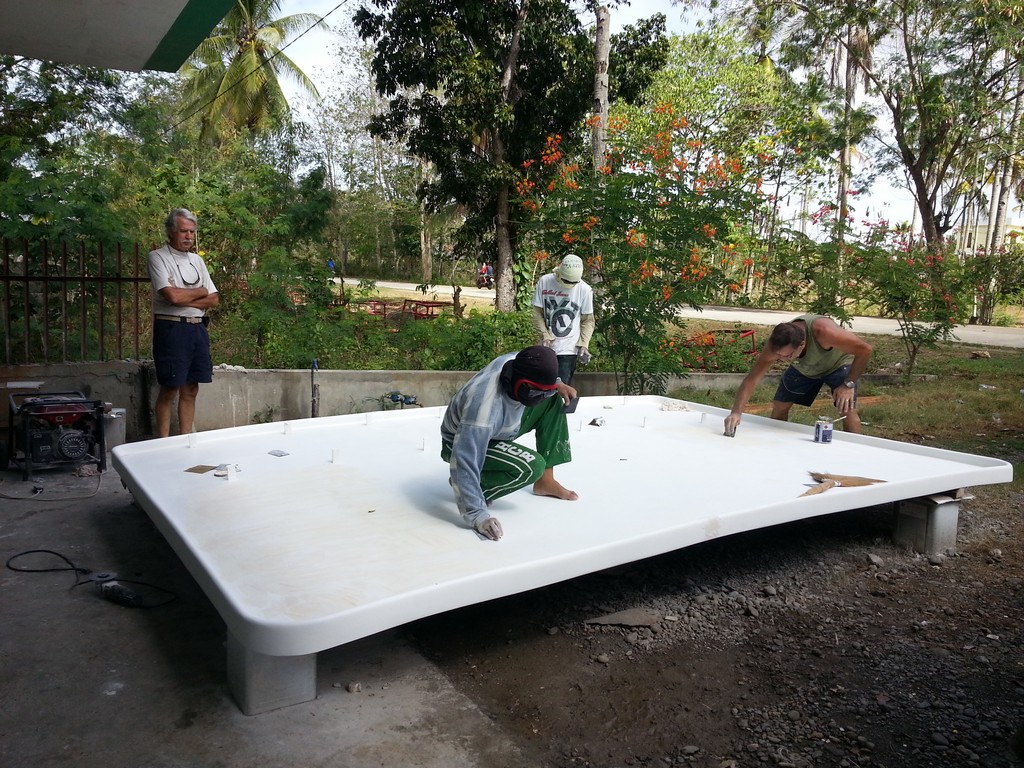
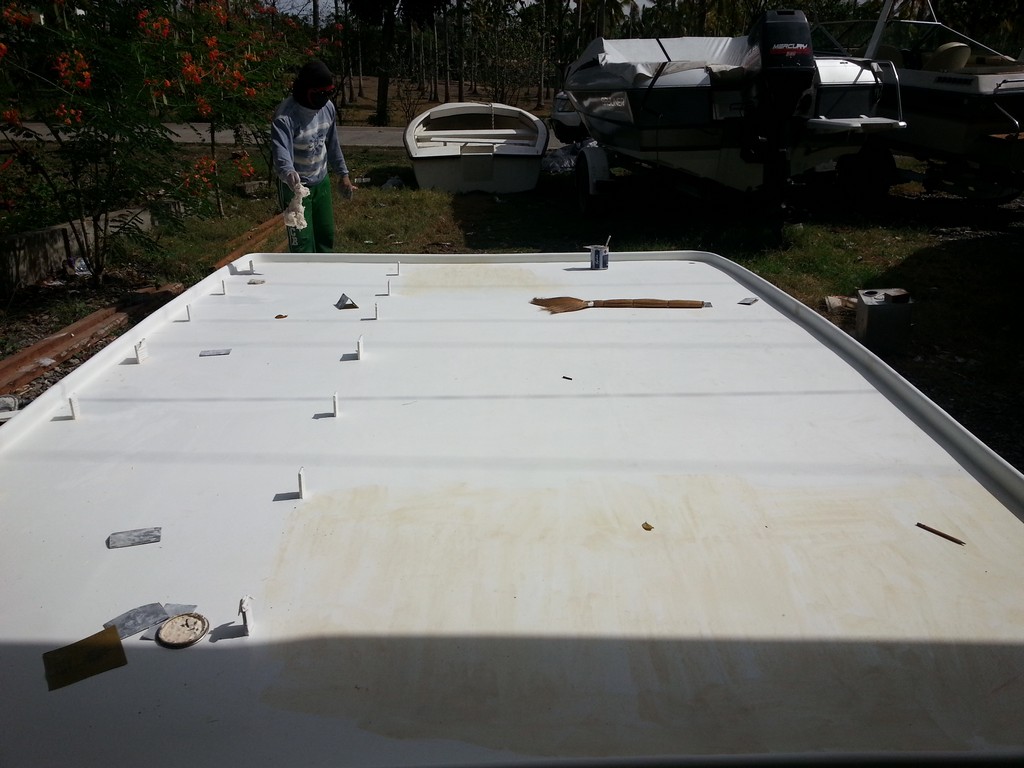
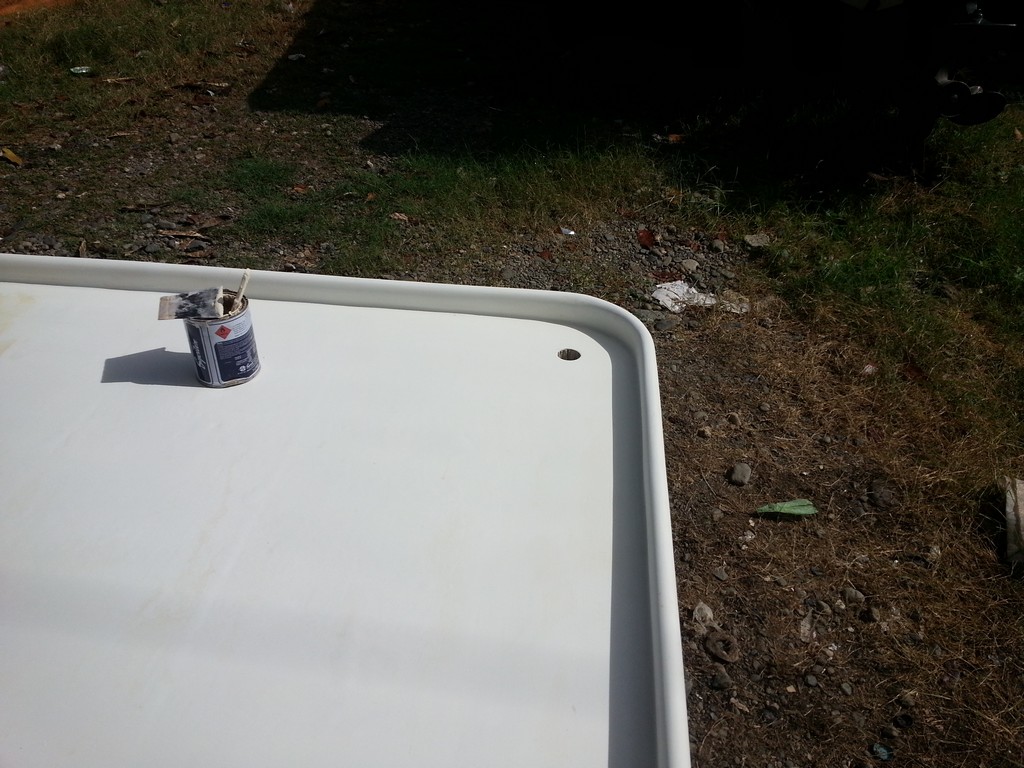
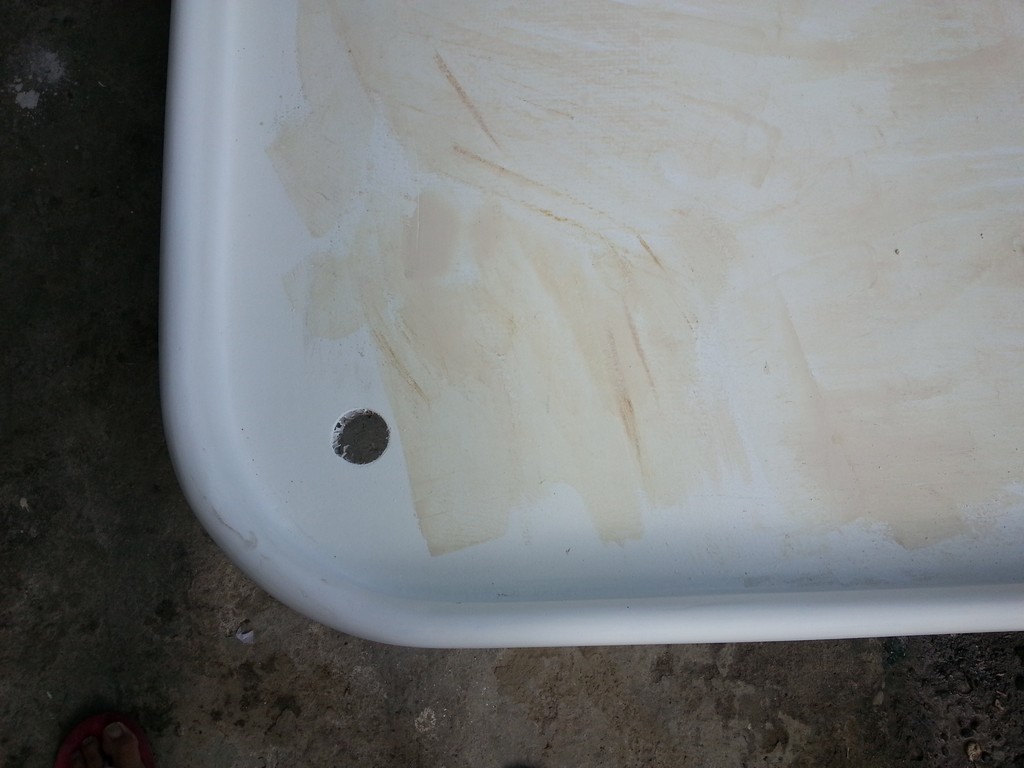
The Top of the Frame is made of white
Celtec Expanded Foam PVC manufactured by Vycom Corp. Dave purchased this in
one sheet in Ft. Lauderdale from E&T Plastics of Florida. We had to special
order because of the size… 10’ x 5’ x ˝”. We used the Celtec 550 (density)
From there it was easy to cut and form in our back yard with a standard jig
saw and a router. It flexes easily enough to make the contour of the top.
It is marginally strong enough for someone to scuttle out occasionally on
one of the frames, but not really strong enough to stand on, in an
unsupported area. Though Dave had plans to paint it (for UV protection), he
has not gotten around to it yet. We just plan to paint it white.
Sherry's comments on our hard dodger:
I love our hard dodger--it has more interior volume (spacier) than a
typical canvas frame dodger--and is really sturdy, so better for handhold
when moving around the boat. And we can keep the hardtop part up in a
hurricane, if, god forbid, we ever have to weather another one of those.
A few tips... the weak spots in the canvas part of a dodger are going to
end up being (a) the stitching (b) the plastic windows (c) the zippers. The
sun and salt air are just murder on all of the above. We specified the
special goretex thread for our stitching, and so far it has held up really
well after 3 years in tropical sun. It costs a lot more per inch than
standard Dacron thread, and many canvas people hate using it (it's so
slippery that it is harder to sew properly) but lasts so much longer that it
pays for itself in the long run. Eventually the standard v90 thread just
rots away in the sun. The UV is just a killer.
The trick to the plastic windows is to keep them out of the sun, covered,
when you can. We had snap on Sunbrella covers made as part of the dodger for
every window, and the roll-up parts of the windows can be rolled up with the
covers on (part of the specs we gave to the canvas people), keeping them
shaded all the time. Sometimes the covers make me feel like I'm living in a
cave, but our windows are still in good shape after 3 years in the brutal
sun.
Finally, the zippers seem to be one of the first things to go. I think
Sunbrella shrinks, and therefore puts a big strain on the zippers. And the
salt and sun... If you're going cruising, I would buy a lot of zipper spares
(just buy 2 of everything you have on the boat). You can't find ANY of that
stuff, zippers, sunbrella, stainless fasteners, plastic window material,
etc, out here. (Maybe in the popular Mexican cruising spots, but nowhere
further south).
The sun isn't such a big thing in the northern parts of the U.S., but
when you go south, the sun is brutal. Deck awnings help too--both to save
your dodger and to help keep the boat cooler. We have our own that were made
for us in Trinidad, but they are such big canvas things, that unless you can
be sure the wind will be less than 10 knots (never a sure thing), we never
put them up.
We finally made a much smaller "eyebrow" that just covers the 8' in front
of the cockpit (the hatches and deck of the primary living space on our
boat). This and our dodger extension covers about 40% of the deck. We have
been eying the Shade-tree kind of awnings with the carbon fiber tent
poles--some neighbors in a marina had one and it seemed great--lightweight,
roomy underneath, but pretty rock solid in normal winds and OK in short
bursts of higher winds. We are talking about trying to retrofit our current
awning with some carbon fiber poles when we get to Hawaii this winter.
(top)
Cockpit Table
In early 2007, Sherry declared my old cockpit table
too unsightly to leave on a circumnavigation with us.
She promptly called a capable wood-working friend, Jerry Ross, to provide
adult supervision and help me build a new one. He had extensive
woodworking experience and a really good shop. I had money, time and
could follow instructions.
We built the new table using teak
strips, marine ply wood, black laminate and epoxy glue. The top
surface was made of 1/4" x 4" teak strips glued
to 3/4" marine
plywood. Black laminate was glued on the bottom. The
edges were trimmed with 1/2" x 1-1/4" teak. After thorough sanding the table
was finished with 4 coats of clear Cetol. As you can see a vast
assortment of clamps and clamping techniques were used to ensure tight glue
joints.
Suppliers:
Seafarer Marine
(Teak)
Painted vs Varnished Teak
Topica Post 2/9/05 I think you are on a better track
using the painted finish. As a matter of fact Jim Dill of Chilly Pepper
recently did his aft teak toe rails with a Napa two part polyurethane very
similar to Awlgrip in a teak color that looks super. While in Trinidad I
used a cheap locally mixed two part polyurethane by Sikkens on my cap and
toe rails that has been on 5 years now, although it is now somewhat sun
bleached on the top. It is still intact but has not been touched in 5 years.
Based on
Jim's recommendation, and he knows paint, I will repaint my exterior wood
soon using the Napa product. We don't do varnishes on Soggy Paws except on
the cockpit teak where we use Cetol touched up every couple of years. We
hate to varnish.
(top)
|
|